
Club Comunicaciones
Argentine sports club founded by postal employees.
Club Comunicaciones is an Argentine sports club based in the Agronomía district of Buenos Aires. It was founded by employees of the Argentine Post office company, originally named Club Atlético Correos y Telégrafos, and changed to its current name in 1953. The club is known for its yellow and black colors, adopted from the distinctive colors used by mail companies worldwide.
- founded
- Founded by employees of the Argentine Post office company (exact year not specified in source)
- location
- Agronomía district, Buenos Aires, Argentina
- colors
- Yellow and black
- current_division
- Primera B Metropolitana (regionalised third division of Argentine football)
- known_for
- Hosting carnival celebrations during the 1950s and 1960s; never played in top category of Argentine football
Lore & Background
Club Comunicaciones was founded by a group of employees of the Argentine Post office company, initially under the name Club Atlético Correos y Telégrafos. In 1953, the club changed to its current name. The club's yellow and black colors were chosen because those were the distinctive colors used by mail companies worldwide. The football squad has never played in the top category in Argentina.
Reader's Guide
Club Comunicaciones holds significance as a community sports institution in Buenos Aires, rooted in the postal service workforce. Its football team competes in the regionalised third division, Primera B Metropolitana, and has won the Primera C title twice, in 1969 and 2004–05. Beyond football, the club offers a wide range of sports including artistic gymnastics, baseball, boxing, field hockey, futsal, handball, roller hockey, martial arts, tennis, and volleyball. The club also gained cultural prominence by hosting carnival celebrations during the 1950s and 1960s. Financial difficulties emerged by 2011, with a debt of $6,700 million and a declaration of bankruptcy, attracting interest from potential buyers including the Government of the City of Buenos Aires.
Did You Know?
- The club was originally named Club Atlético Correos y Telégrafos after the State mail company where its founders worked.
- Club Comunicaciones hosted carnival celebrations during the 1950s and 1960s.
- The club's colors, yellow and black, were adopted because they were the distinctive colors used by mail companies worldwide.
- By 2011, the club had a debt of $6,700 million and had been declared in bankruptcy.
Postal Roots and a Yellow-and-Black Identity
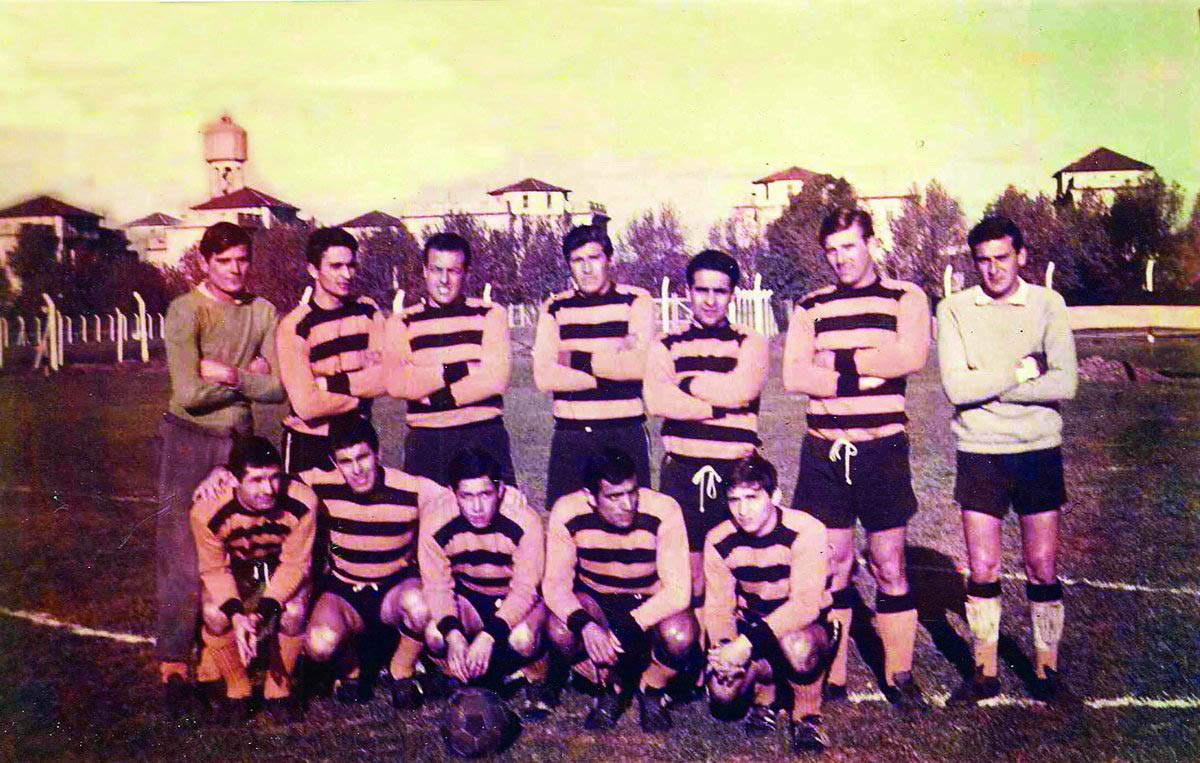
Born from the collective spirit of Argentine Post office workers, Club Comunicaciones traces its origins to a group of employees who banded together to form a sporting club. Originally christened Club Atlético Correos y Telégrafos, a direct nod to the State mail company that employed its founding members, the organization carried the identity of postal service for decades. It was not until 1953 that the club shed its old name and adopted the shorter, more recognizable label of Comunicaciones. The visual identity of the club tells its own story: the yellow and black stripes that adorn its kits were not chosen arbitrarily but were lifted straight from the distinctive livery used by postal services around the globe. This connection to the world of mail delivery remains woven into the club's character, setting it apart from the thousands of other football clubs scattered across Buenos Aires. Rooted in the Agronomía district, the club has always carried the working-class pride of its postal origins, a heritage that continues to define its community identity long after the last letter was stamped and sent.
A Multi-Sport Palace in Agronomía
Far from being a single-discipline football outfit, Club Comunicaciones has always prided itself on being a genuine multi-sport institution. Beyond its football pitch, the club's grounds accommodate a remarkable breadth of athletic pursuits, including artistic gymnastics, baseball, boxing, field hockey, futsal, handball, roller hockey, martial arts, tennis, and volleyball. The physical infrastructure reflects this ambition: gymnasiums, dedicated basketball courts, tennis courts, additional football pitches, and the main stadium all sit within the club's complex in Agronomía. This diversity of offerings means that a single family might send a child to play handball in the morning and watch a boxing match in the evening, all under the same yellow-and-black roof. In a city dominated by football, Comunicaciones' commitment to so many different disciplines gives it a community character that feels closer to a neighborhood sports palace than a traditional club. The breadth of activities also serves as a practical lifeline, spreading the club's identity and revenue across numerous sports rather than relying on a single team's fortunes.
The Ceiling of the Third Tier
On the football pitch, Club Comunicaciones occupies a position that reflects both aspiration and limitation. The squad currently competes in Primera B Metropolitana, the regionalised third tier of the Argentine league system, and the club has never broken through to the top category of Argentine football. That absence from the elite level is a defining fact of the team's history, a ceiling that successive generations of players and fans have yet to shatter. Nevertheless, the club has tasted genuine success at the lower levels, lifting the Primera C title on two occasions: first in 1969 and again in the 2004–05 season. Those two triumphs stand as the pinnacles of the football section's competitive record, moments when the yellow-and-black side proved it could outperform peers in the third division. The gap between those celebrated campaigns and the club's current standing in the third tier speaks to the cyclical nature of Argentine lower-league football, where promotion and relegation can reshape a club's fortunes within a single season. For the faithful in Agronomía, the dream of reaching the first division remains an unwritten chapter in the club's story.
Carnival Nights and the Shadow of Bankruptcy
Beyond the sporting arena, Club Comunicaciones carved out a distinctive cultural niche in Buenos Aires during the mid-twentieth century. The club became a well-known venue for carnival celebrations throughout the 1950s and 1960s, hosting festivities that drew crowds and added a festive, communal dimension to its identity. For two decades, the grounds in Agronomía were as much a stage for music, dance, and celebration as they were for athletic competition, reinforcing the club's role as a social anchor for the neighborhood. That era of cultural vibrancy, however, stands in stark contrast to the financial turbulence that would later define the club's narrative. By 2011, Comunicaciones carried a staggering debt of 6,700 million and had been formally declared bankrupt. The crisis attracted interest from multiple parties wishing to acquire the club, and among them was the Government of the City of Buenos Aires itself, a signal of how significant the institution had become to the local community. The juxtaposition of carnival nights and court filings encapsulates the rollercoaster that has shaped this small but proud club.
Gallery




More in Basketball teams in Argentina 1-24
Spotted an error? Know more?
This is a living reference — every entry is fact-audited, and reader corrections feed straight into our audit queue. Suggest an edit · See this site's audit record